

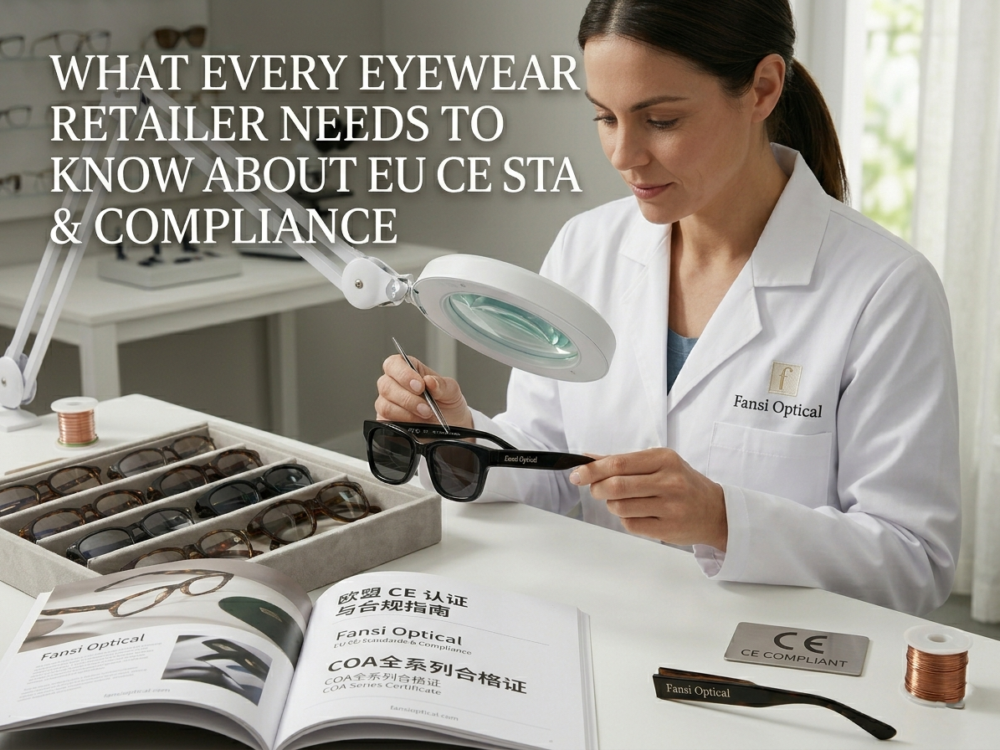
For global eyewear retailers, boutique owners, and independent optical distributors, sourcing high-quality frames is only half the battle. The real challenge often lies in navigating the strict regulatory landscape of international trade. If you are importing eyewear into the European Union, there is one stamp you cannot afford to overlook: the CE Mark.
More than just a sticker on the temple, the CE mark is a legal mandate. Failing to comply can result in catastrophic consequences for your business—including customs seizures, heavy financial penalties, and irreversible damage to your retail brand’s reputation.
In this comprehensive guide, we break down everything you need to know about EU CE standards and provide an actionable compliance checklist to secure your supply chain.
Understanding the Legal Framework: Medical Devices vs. Sunglasses
To ensure compliance, retailers must first understand how the EU classifies eyewear. The regulation varies significantly depending on the product category:
- Optical Frames (Clear Lenses): In the EU, corrective optical frames are classified as Class I Medical Devices under the Medical Device Regulation (MDR) (EU) 2017/745. They must adhere to strict biocompatibility, mechanical strength, and nickel-release standards to ensure they are safe for prolonged skin contact.
- Sunglasses (Plano/Ready-to-Wear): Sunglasses are governed as Personal Protective Equipment (PPE) under Regulation (EU) 2016/425. They must comply with the harmonized technical standard EN ISO 12312-1, which regulates precise light transmittance, UV protection filters, and impact resistance.
The Crucial Compliance Checklist for Eyewear Retailers
When auditing a manufacturing partner or preparing your documentation for EU customs, utilize this 4-step checklist to verify full compliance:
1. The CE Marking on the Product
The CE logo must be visibly, legibly, and indelibly marked on the product—typically on the inner temple of the frame. It must be accompanied by the model number, frame measurements, and manufacturing batch codes for traceability.
2. Declaration of Conformity (DoC)
The Declaration of Conformity is a legally binding document issued by the factory. It states that the product meets all essential health and safety requirements of the applicable EU directives. Customs authorities frequently demand this document during clearance. If your supplier cannot produce a clear, up-to-date DoC specifying your exact model numbers, your shipment is at high risk of being impounded.
3. Technical Documentation & Laboratory Test Reports
A robust technical file must back up your DoC. For premium cellulose acetate frames, this includes verified laboratory test reports proving:
- ISO 12870 Compliance: Testing mechanical stability, perspiration resistance, and bridge deformation.
- Nickel Release Standards (EN 16128): Ensuring any metal parts or wire-cores in contact with the skin do not trigger allergic reactions.
- Filter Category (For Sunglasses): Clear labeling of UV protection levels (e.g., Cat. 3 for general use).
4. Traceable Packaging and User Manuals
Every pair of eyewear entering the EU market must be accompanied by clear instructions and safety information written in the official languages of the destination countries. This must include the manufacturer’s registered name, address, and the specific filter category of the lenses.
Why Low-Cost Wholesalers Are a Regulatory Gamble
Many retail buyers fall into the trap of purchasing from lowest-price wholesalers who promise “pre-stamped CE frames.” However, a stamp without the underlying legal paperwork is meaningless.
When EU customs officials audit a shipment, they don’t just look at the frame; they cross-reference the batch codes with factory test reports. If a cheap wholesaler disappears when customs requests a Technical File, the retailer bears 100% of the legal and financial liability. Investing in a knowledgeable, certified manufacturing partner is the ultimate insurance policy for your optical business.
Partnering for Success: How Fansi Optical Secures Your Supply Chain
At Wenzhou Fansi Optical Co., Ltd., we don’t just design and manufacture premium, hand-polished acetate eyewear; we actively protect our global partners’ commercial interests.
As an established Chinese eyewear factory based in Wenzhou, we possess years of expertise in international trade compliance and logistics. We handle the heavy lifting of regulatory compliance so you can focus entirely on growing your retail presence.
When you source our premium collections, you receive:
- Full compliance with updated EN ISO 12312-1 and MDR (EU) 2017/745 standards.
- Flawless, traceable laser-engraved CE markings and customized private label logos.
- Ready-to-file Declarations of Conformity (DoC) and exhaustive laboratory testing verification files for seamless customs clearance.
- Comprehensive technical support for high-density, hypoallergenic cellulose acetate components.
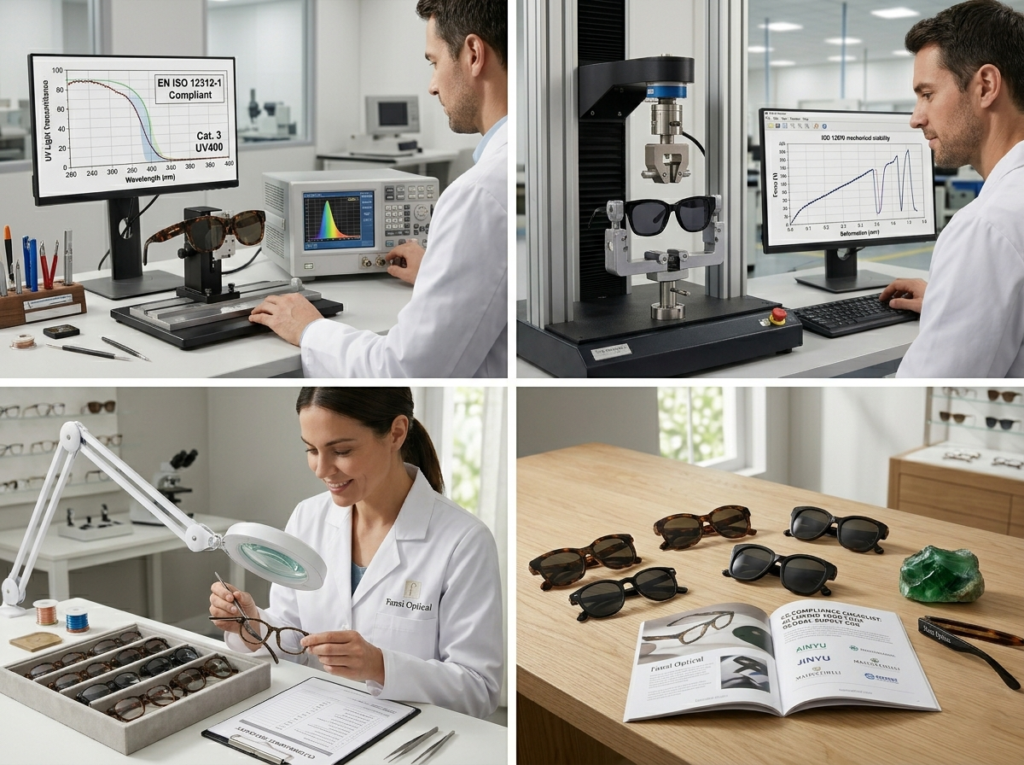
Don’t let regulatory hurdles slow down your brand’s growth. Build a reliable, compliant, and premium supply chain today.
Looking to expand your boutique collection with fully certified, premium optical frames?