

Choosing the right material is one of the most important decisions when developing a new eyewear collection. It affects not only the appearance of the frame but also its weight, comfort, durability, manufacturing cost, and market positioning.
For eyewear brands, importers, retailers, and distributors, two popular options are acetate and TR90. Both materials offer distinct advantages, but they serve different product requirements and consumer expectations.
So, which is better for your brand: acetate or TR90? Understanding their differences can help B2B buyers make more informed sourcing decisions and work more effectively with an experienced eyewear manufacturer.
1. What Is Acetate Eyewear?
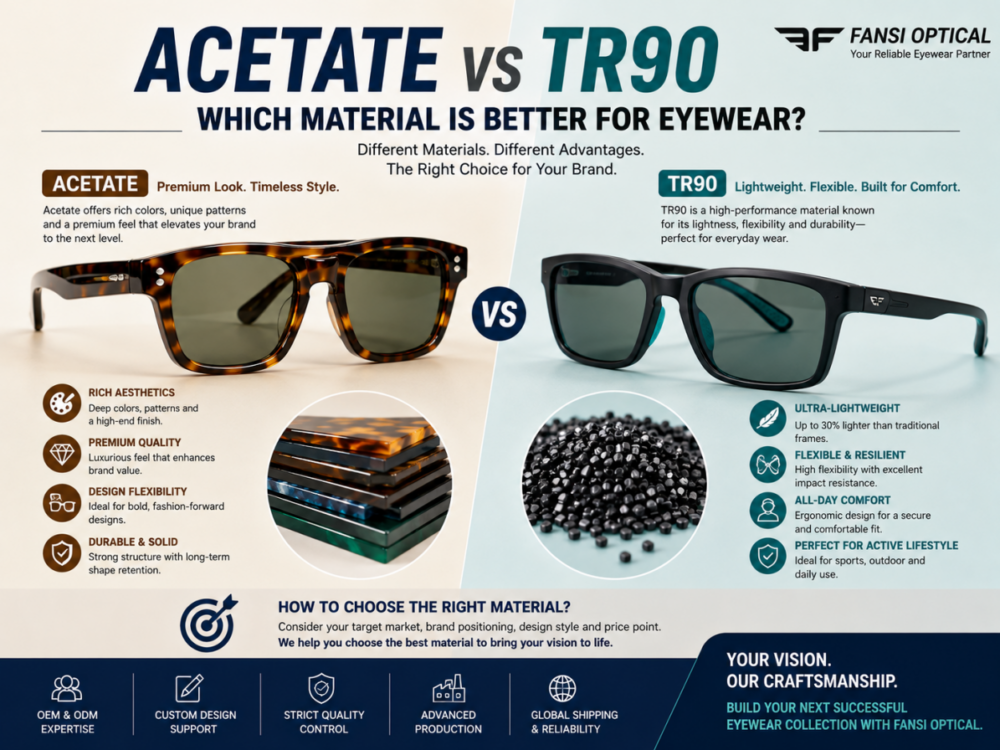
Acetate is a cellulose-based material widely used in premium optical frames and sunglasses. It is valued for its rich colors, layered patterns, polished finish, and design versatility.
One of the biggest advantages of acetate is its aesthetic potential. Manufacturers can create distinctive color combinations, transparent effects, tortoiseshell patterns, and sophisticated finishes that help brands establish a recognizable visual identity.
Acetate frames are particularly suitable for fashion eyewear, premium sunglasses, and collections where material appearance plays a major role in the purchasing decision.
For brands working with an acetate eyewear manufacturer, the material offers considerable opportunities for differentiation through color development, frame thickness, surface finishing, and distinctive design details.
However, acetate also has some limitations. Depending on the frame design and construction, it can be heavier than TR90. Production may involve more labor-intensive cutting, shaping, polishing, and finishing processes, which can affect manufacturing costs and lead times.
For B2B buyers targeting the mid-range or premium market, acetate can be an excellent choice when appearance, design identity, and perceived value are top priorities.
2. What Is TR90 Eyewear?
TR90 is a lightweight thermoplastic material commonly used in performance-oriented and everyday eyewear. It is known for its flexibility, low weight, and suitability for comfortable frame designs.
Compared with many conventional frame materials, TR90 can offer excellent wearing comfort, making it attractive for sports sunglasses, casual eyewear, children’s frames, and products designed for extended daily use.
Another advantage is its flexibility. Properly engineered TR90 frames can withstand repeated bending better than many rigid frame constructions, although actual performance depends on material grade, frame geometry, processing, and product design.
For a TR90 eyewear manufacturer, this material provides opportunities to develop lightweight frames in different colors and shapes, particularly for brands that prioritize comfort and practical functionality.
TR90 also supports efficient production through molding processes, making it suitable for certain larger-volume collections. However, tooling requirements, mold complexity, and production quantities can influence the overall cost.
Its limitations are mainly related to appearance and finishing. Although TR90 can be produced in many colors and styles, it may not naturally deliver the same layered visual depth and premium polished aesthetic associated with high-quality acetate.
3. Acetate vs TR90: Key Differences
For B2B buyers, the best material depends on the target customer, retail price, design requirements, and intended application.
Appearance and design
Acetate is often preferred for premium-looking frames, rich color patterns, and distinctive fashion designs. TR90 is particularly suitable for streamlined, lightweight, and functional styles.
Weight and comfort
TR90 generally has an advantage when low weight and flexibility are major priorities. Acetate can provide excellent comfort too, but frame thickness and construction have a greater influence on its overall weight.
Durability
Both materials can produce durable eyewear when correctly designed and manufactured. TR90 is valued for flexibility, while acetate offers a solid frame structure and can be adjusted by trained professionals using appropriate techniques. Neither material is indestructible, and product performance depends on construction and quality control.
Manufacturing cost
The final cost depends on more than the raw material. Design complexity, tooling, finishing, order quantity, customization, and production processes all influence the quotation. TR90 may be cost-effective for suitable molded designs, while acetate can justify a higher price positioning through its appearance and finishing.
Best applications
Acetate is often suitable for fashion sunglasses, premium optical frames, and design-led collections. TR90 is often suitable for lightweight everyday eyewear, sports-inspired designs, and products where flexibility and comfort are essential.
4. Which Material Is Better for Your Eyewear Brand?
There is no single winner in the acetate versus TR90 comparison. The right choice depends on your business strategy.
If your brand focuses on premium design, distinctive colors, sophisticated finishing, and fashion-oriented products, acetate may be the stronger option.
If your target market values lightweight comfort, flexibility, and practical everyday performance, TR90 may be more appropriate.
Some brands may benefit from offering both materials within the same collection. Acetate can support premium positioning, while TR90 can serve customers seeking lightweight and functional alternatives.
This approach allows retailers and distributors to address different customer preferences without limiting their product range to one material category.
5. What Should B2B Buyers Discuss With an Eyewear Supplier?
Before selecting a material, buyers should communicate their requirements clearly to their manufacturing partner.
Important considerations include the target retail price, frame design, color options, expected order quantity, product weight, finishing requirements, and intended market.
Buyers should also ask about sample development, tooling costs where applicable, material specifications, quality-control procedures, and production lead times.
An experienced custom eyewear manufacturer should be able to explain the advantages and limitations of each option and recommend a material based on the product’s intended use.
For businesses seeking an eyewear supplier in China, technical communication and consistent production quality are just as important as the initial quotation.
The goal is not simply to find the cheapest material, but to select one that supports product quality, brand positioning, and long-term commercial success.
6. The Future of Eyewear Materials
Eyewear material selection is becoming increasingly connected to product differentiation, comfort, design innovation, and sustainability.
Brands are exploring new color effects, lighter constructions, improved material performance, and more responsible sourcing options. Interest in recycled and bio-based materials is also encouraging manufacturers to consider the environmental impact of material selection and production.
For an established eyewear manufacturer, understanding these developments helps support brands as they respond to changing market expectations.
However, sustainability claims should always be supported by accurate material specifications and relevant documentation rather than assumptions based solely on a material’s name.
Conclusion: Choose the Right Material for the Right Market
Acetate and TR90 each offer valuable advantages. Acetate excels in design expression, rich colors, and premium aesthetics, while TR90 is particularly attractive for lightweight, flexible, and comfortable eyewear.
For eyewear brands, importers, retailers, and distributors, the best decision comes from balancing design, performance, cost, and target customer expectations.
At FANSI OPTICAL, we work with international eyewear businesses to develop and manufacture eyewear according to different design, material, and customization requirements. Whether you are planning a premium acetate collection or exploring lightweight TR90 frames, choosing the right manufacturing partner can help turn your product concept into a commercially viable collection.
Looking for an experienced acetate or TR90 eyewear manufacturer? Contact FANSI OPTICAL to discuss your OEM, ODM, or custom eyewear project.